Active This website shares traditional craft techniques for informational purposes only. Results vary by individual skill and material quality.

Reference materials, harvest guidance, and pattern archives gathered from years of trial, error, and stubborn repetition in southern Victoria.

View gallery
  • Open patterns
  • Seasonal guides
  • Tested methods

Harvesting Bark Responsibly

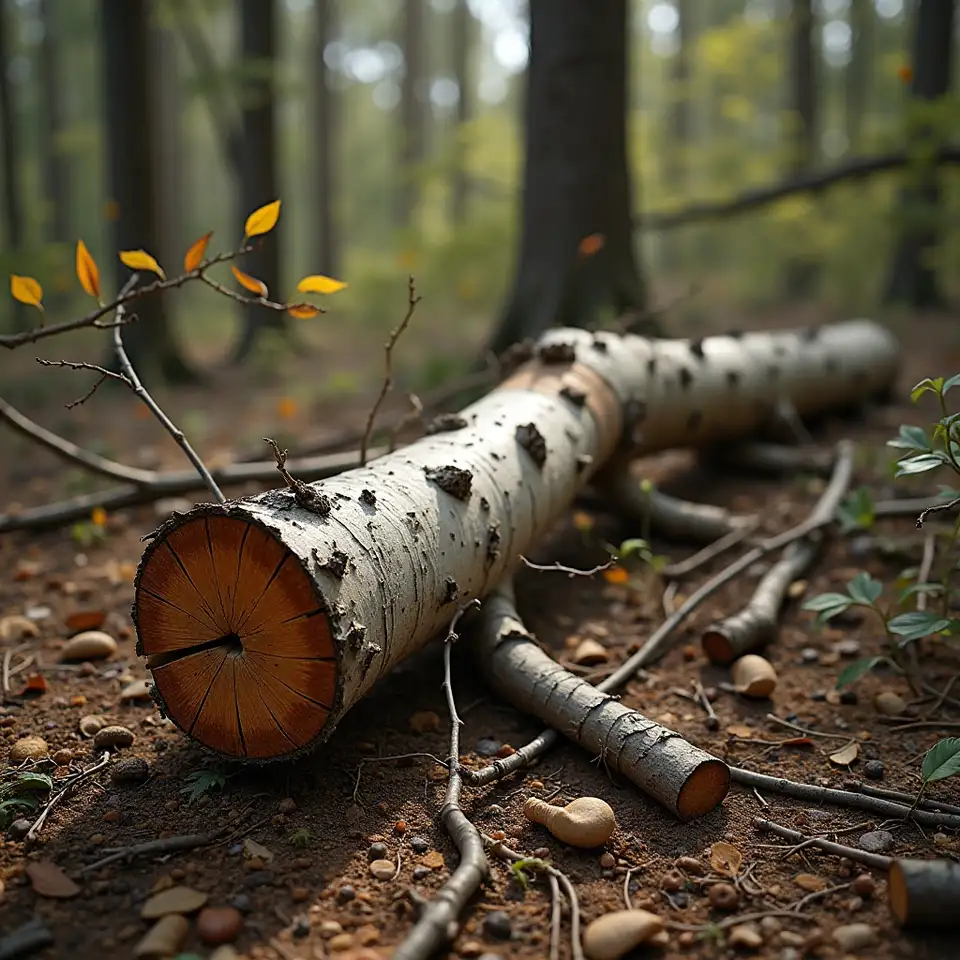
Birch bark strips cleanly only from trees that have already fallen, and only during specific moisture windows in late spring and early autumn. We map our harvest routes across public and private land with permission, taking what we need and leaving enough for decomposition and wildlife.

Attempting to peel living birch damages the tree and produces inferior material. The bark you want has already begun to separate from the wood beneath it. Patience in locating the right source saves more time than rushing the wrong one.

Reference

Weaving Terms Explained

The vocabulary of birch bark craft contains words borrowed from forestry, textile work, and regional dialects. We define them as we use them, not as dictionaries might prefer.

Material
  • The inner fibrous layer of bark that lies between the outer corky surface and the wood itself. In birch, the bast remains flexible when properly prepared and provides the strength in woven structures. Weavers often separate it from the outer bark for fine work.

Technique
  • The practice of cutting shallow lines into fresh bark to control how it splits as it dries. Proper scoring prevents random cracking and allows the weaver to shape strips of predictable width and length. Done incorrectly, it ruins an entire harvest.

  • A weaving method where two or more active elements cross over each other as they interlace with passive foundation strips. In birch bark work, twining creates decorative ridges and adds structural rigidity to basket walls without requiring additional fasteners.

  • A weaving technique where a single weft strip passes behind one stake and in front of the next in continuous rotation. It produces a plain, even surface and is often the first pattern taught to beginners because it reveals tension problems immediately.

Process
  • The controlled drying and storage of prepared bark strips before use. Fresh bark is too wet to weave cleanly; fully dried bark becomes brittle. Seasoning finds the middle ground where the material bends without splitting and holds its shape after tension is released.

Structure
  • A horizontal row of weaving that forms a structural band in a basket. Multiple wales create the visual pattern and physical strength of the finished piece. Consistent wale spacing separates competent work from work that warps within its first year.

  • The rigid vertical elements that form the skeleton of a woven basket. In birch bark construction, stakes are typically thicker strips inserted into a base and then bent upward to define the wall shape. Everything else weaves around them.

The Museum of Applied Arts and Sciences in Sydney holds a small but well-documented collection of Indigenous and colonial Australian bark containers. Their online catalogue includes provenance notes that help distinguish regional construction methods from imported European techniques adopted locally.

The Victorian Koorie Heritage Trust maintains records of traditional material use in southeastern Australia, including seasonal harvest practices for bark and related fibres. Access requires advance arrangement, and their archivists rightly expect visitors to explain their research purpose clearly.
For practical technique reference, we keep a well-worn copy of a mid-twentieth-century Scandinavian craft manual that describes preparation methods remarkably similar to our own. The text is out of print, but copies circulate among craft libraries and secondhand dealers specialising in folk art.
The Australian National Botanic Gardens in Canberra publishes botanical profiles of Betula species that include habitat notes and seasonal behaviour relevant to anyone trying to locate fallen trees. Their information is current and free, though it stops short of advising on craft-specific harvesting.

Our own open pattern archive contains diagrams, photographs, and written instructions for every piece we have successfully completed. It also documents our failures, because a pattern that did not work teaches as much as one that did. Visitors may browse, download, and contribute corrections.

Questions About These Resources

If you need clarification on a technique, want to suggest an addition to our archive, or have found a historical source we have not encountered, we are interested. We do not promise immediate replies, but we do promise to read everything and respond when we have something useful to say.