Birch Bark Weaving Techniques and Projects
A learning hub where beginners and experienced weavers discover methods for working with bark gathered from fallen trees. No shortcuts, no secrets withheld.
Material and Tool Guidance
Practical advice for selecting, preparing, and storing birch bark, plus workspace setup and tool recommendations from our Australian workshop.
Score Before You Strip
Shallow cuts control how bark splits as it dries. Without scoring, random cracks ruin entire harvests. A sharp knife and steady hand matter more than expensive equipment.
Season Your Stock
Fresh bark is too wet to weave; fully dried bark becomes brittle. Roll strips loosely, store in cool shade, and check weekly for mould until the moisture content stabilises.
Soak Immediately Before Use
Cut strips to width first, then soak in clean water until pliable. Timing matters: too dry and the bark splits under tension; too wet and the weave loosens as it dries.
Keep Tools Simple and Sharp
A good knife, a straight edge, and a water container suffice for most work. We are skeptical of specialty tools marketed to crafters. Sharpness and maintenance beat novelty every time.
Beginner Weaving Progression
Move from simple woven strips to complete baskets through three clear instructional stages. Each step builds the skills required for the next.
Prepare and Test Strips
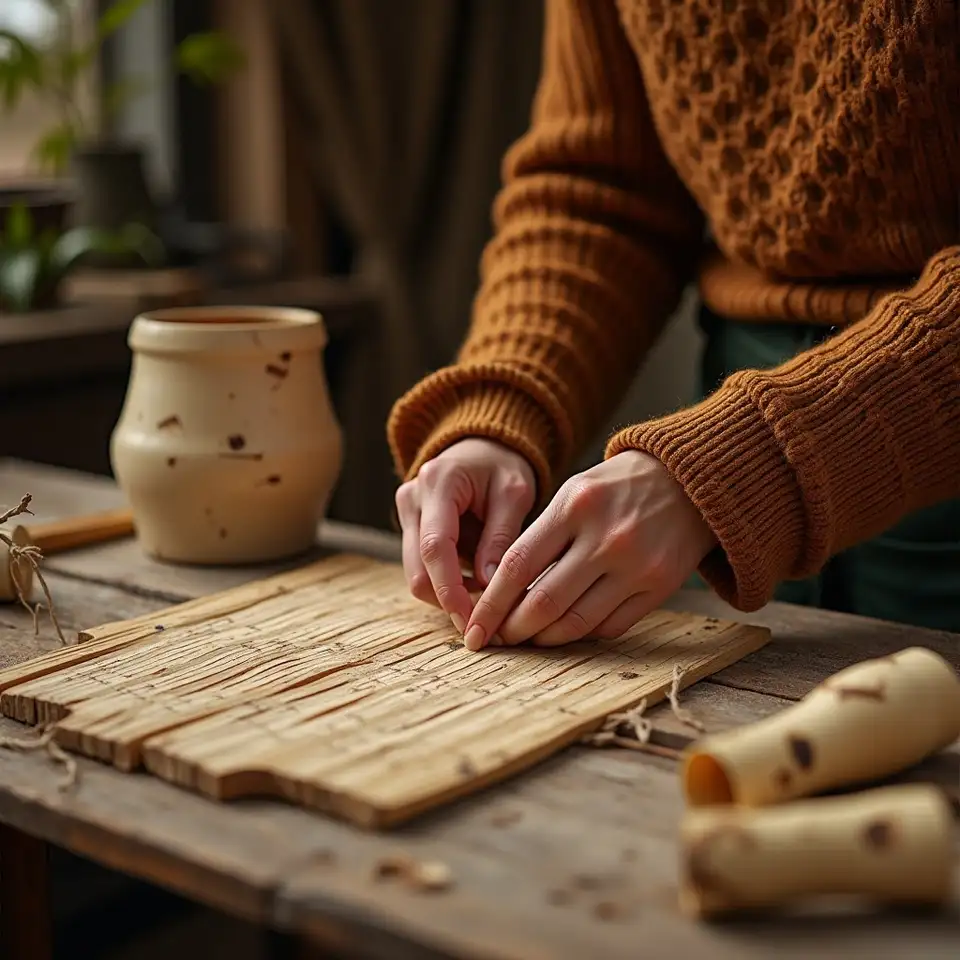
Learn to score, cut, and soak bark until it reaches workable pliability. Practice basic tension by weaving flat test strips without worrying about shape. Your first attempts will crack. That is the lesson.
Construct a Simple Base
Create a flat woven base using randing technique, then insert stakes and bend them upward to form walls. This stage reveals whether your bark was properly seasoned. Rushed preparation shows here.
Shape and Secure the Rim
Weave to height, then trim stakes, fold them into a rim, and lock everything with a final row of twining. Dry slowly in shade. A basket dried too fast warps permanently.
Traditional Patterns and Finishing Methods
Birch bark weaving offers patterns that range from plain utilitarian surfaces to complex decorative structures. The techniques below represent methods we have tested repeatedly in our own workshop. Each pattern solves a specific structural problem rather than existing merely for appearance.
Randing for Beginners
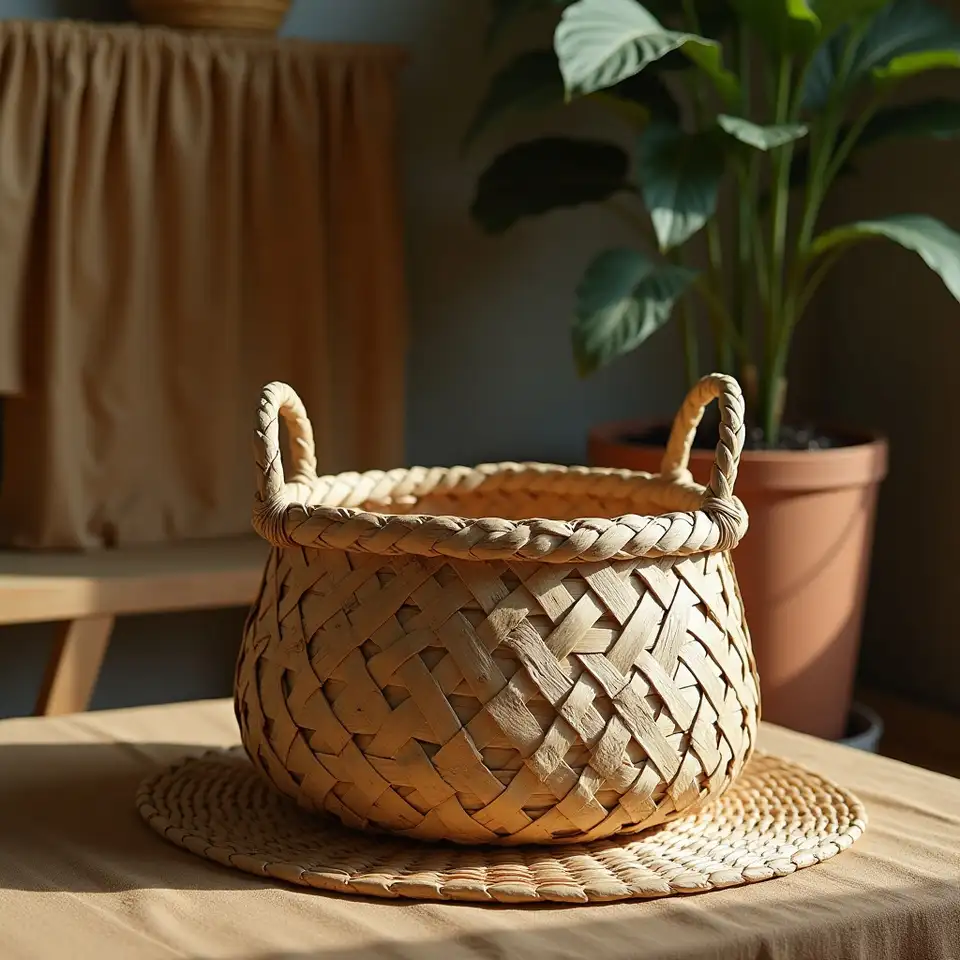
Randing is the simplest interlacing method: one weft strip passes behind a stake, in front of the next, and repeats. It produces an even surface and immediately reveals tension problems. Beginners should master this before attempting anything more complex, because uneven randing cannot be hidden later.

Twining for Structure
Twining uses two active elements that cross over each other as they interlace with stakes. This creates decorative ridges and adds rigidity without extra fasteners. We use twining at stress points like rim transitions and handle attachments, where plain weave would eventually loosen.
Rim and Edge Finishing
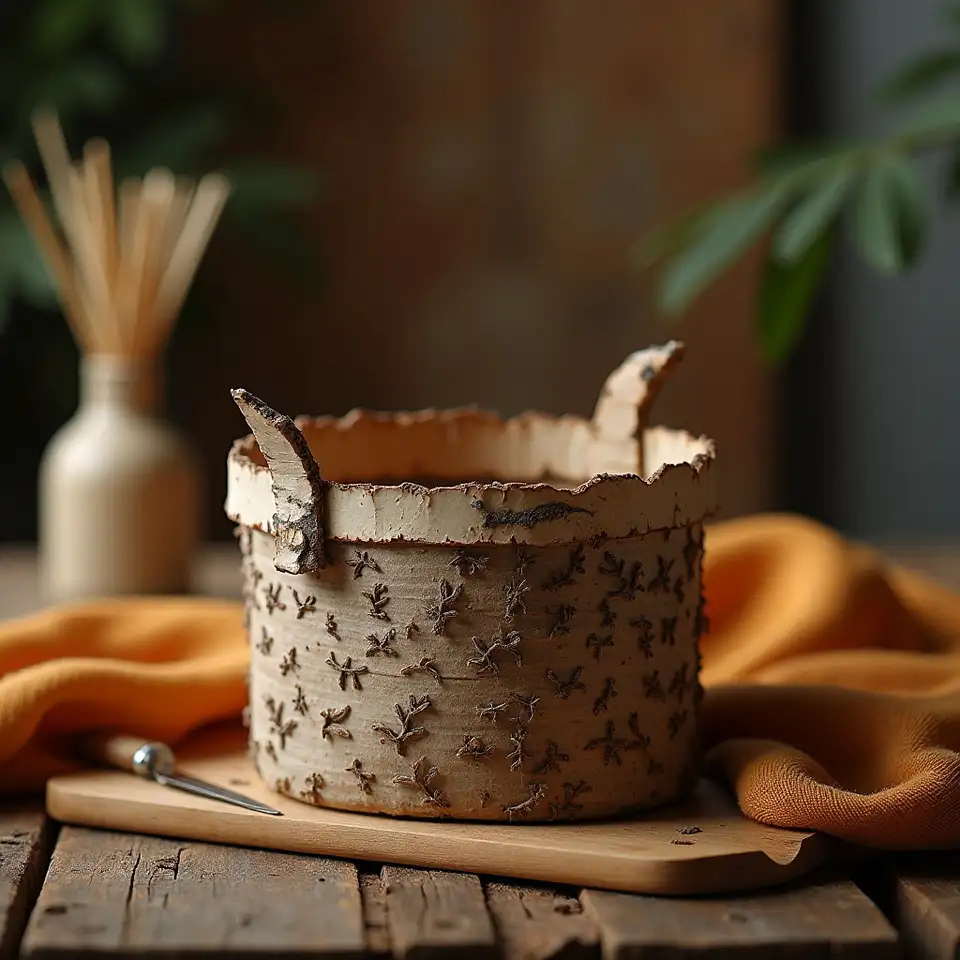
A basket without a proper rim unravels. The standard method folds stakes inward and locks them with a final row of twining. Variations include wrapped rims for extra durability and decorative braided edges for display pieces. The rim is not an afterthought; it is the structure that holds everything together.
How long does prepared bark need to season before use?
- Fresh bark requires two to four weeks of controlled storage.
- Roll strips loosely to prevent mould and allow air circulation.
- Check weekly for soft spots or discolouration during seasoning.
- Properly seasoned bark bends without splitting and holds shape after weaving.
What tools are essential for a beginner?
- A sharp knife with a comfortable handle is the most important tool.
- A metal straight edge helps cut consistent strip widths.
- Clean water containers for soaking bark before and during work.
- We avoid recommending specialty tools until basic skills are established.
How durable are finished birch bark baskets?
- Well-made baskets last decades with normal indoor use.
- Betulin in the bark naturally repels water and resists decay.
- Avoid prolonged direct sunlight, which causes brittleness over time.
- Dried baskets can be rehydrated for minor repairs if damage occurs.
Can I learn these techniques without attending a workshop?
- Our open archive contains diagrams and instructions for self-directed learning.
- Many beginners succeed through patient practice and careful reading.
- Workshops accelerate progress by providing immediate feedback on errors.
- Either path requires willingness to ruin early attempts without discouragement.
Harvest Only Fallen Trees
Living birch damages easily and produces inferior bark. We collect only from trees already downed by wind or age, during moisture windows in late spring and early autumn when the bark strips cleanly.